Flatbed, container, tipper, tanker, lowbed or refrigerated: which semi-trailer suits your business in Côte d'Ivoire? Our guide.
With the ports of Abidjan and San-Pédro and the corridors serving the interior and neighbouring countries, Côte d'Ivoire moves thousands of semi-trailers every day. But a semi-trailer is not one-size-fits-all: the one suited to containers will not suit fuel, nor construction machinery. Here is an overview of the main models, and the criteria for making the right choice.
The flatbed semi-trailer
It is the most versatile. Its flat deck takes palletised goods, building materials, reinforcing steel or heavy packages. Fitted with container twist locks, it can also carry containers. Side boards and stakes let it adapt to varied loads.
It suits hauliers who work for several customers and do not want to depend on a single type of goods.
The container semi-trailer
Lighter than a flatbed, the container semi-trailer, known as a skeletal trailer, is reduced to a chassis fitted with twist locks. It is designed for a single task: carrying 20 or 40-foot containers, especially between the port and logistics zones. Its lightness means a higher payload and lower fuel consumption for the tractor.
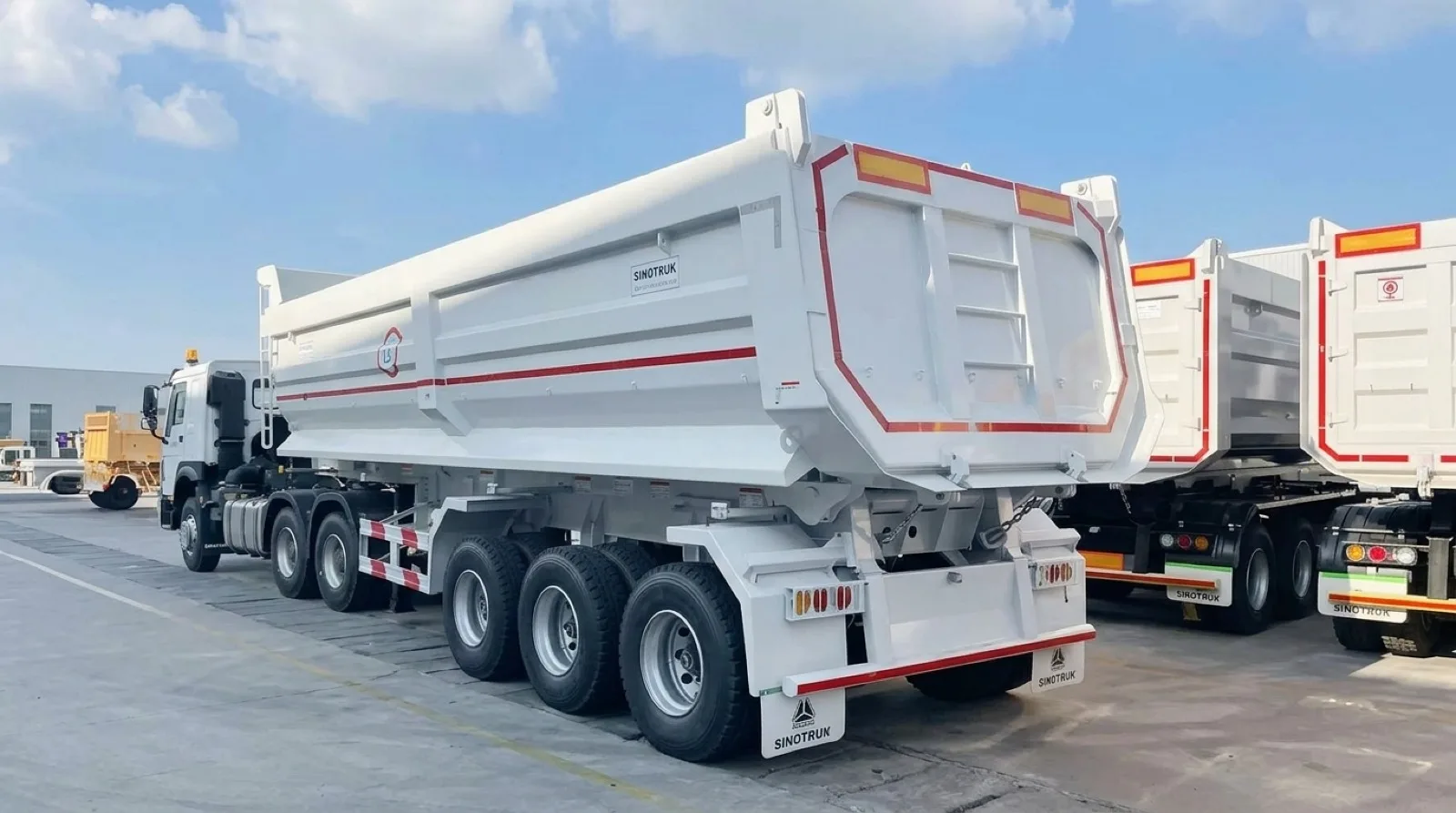
The tipper semi-trailer
The tipper semi-trailer carries large volumes of sand, laterite, aggregates or bulk farm produce. It unloads in moments thanks to its ram. It is popular over long distances, where a rigid dump truck would be less profitable, notably for supplying large sites from quarries.
The tanker semi-trailer
Fuel, oils, water or liquid foodstuffs: the tanker is specialised equipment. The number of compartments, the tank material and the safety equipment depend on the product carried. For hydrocarbons, safety requirements are strict: check that the equipment complies with the applicable rules and with your clients' specifications before any purchase.
The lowbed semi-trailer
Low-slung, the lowbed carries construction machinery: excavators, bulldozers, graders, compactors. Its ramps let the machines climb on under their own power. It must be sized for the heaviest machine you will have to move, and paired with a powerful enough tractor, usually a 6x4.
The refrigerated semi-trailer
Essential for fish, meat, dairy products or fruit, the refrigerated trailer keeps a constant temperature thanks to an insulated body and a refrigeration unit. In the Ivorian climate, the quality of the insulation and the reliability of the refrigeration unit are decisive: a breakdown on the road can mean losing the whole cargo.
2, 3 or 4 axles?
The number of axles determines the load the semi-trailer can carry while respecting the maximum load per axle. The 3-axle semi-trailer is the most common configuration for general haulage. 4-axle models are reserved for heavy loads, such as some lowbeds or tipper semi-trailers used in quarries. Some models have a lift axle, which reduces tyre wear and fuel consumption when the trailer runs empty.
Mechanical or air suspension?
Mechanical leaf-spring suspension is robust, simple and inexpensive to maintain: it remains the most widespread choice for tracks and heavy loads. Air suspension gives a smoother ride and better protects fragile goods, but it needs closer maintenance.
Check compatibility with your tractor
Before buying, check that the fifth-wheel height of your tractor, the kingpin, the brake connections and the lighting are compatible with the semi-trailer. Also check that the tractor's power suits the total weight of the loaded combination.
Start from the use
The right semi-trailer is the one that matches what you carry most often, not the exceptional load. List your goods, your routes and your volumes: the model almost chooses itself.
Holding Deal Africa offers new and used semi-trailers, flatbed, tanker, lowbed, refrigerated or tipper, in stock or to order. Tell us what you carry, on which routes and at what load: you will receive a quote within 24 hours.